Dr. Indira Laxman Dhumne: How a Plant Scientist Built India's Largest Seed Potato Minituber Facility at Mahindra HZPC
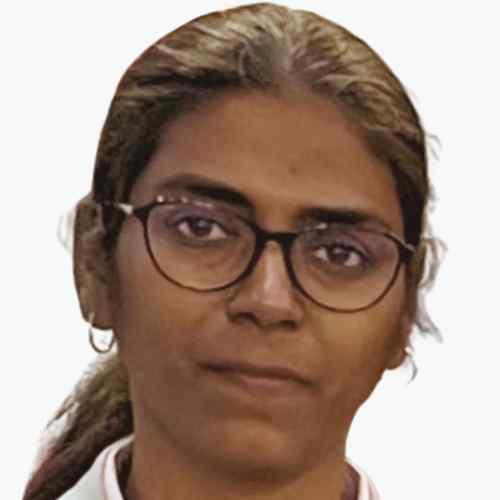
Dr. Indira Laxman Dhumne
- Who Is Dr. Indira Laxman Dhumne?
- Career Journey: From Tissue Culture to Potato Industry Leadership
- Scaling Mahindra HZPC's Minituber Revolution
- Introducing New Potato Varieties to Indian Farmers
- Championing Women in the Potato Sector
- The Road Ahead: India's 125 Million Tonne Target
- Frequently Asked Questions
Who Is Dr. Indira Laxman Dhumne?
In an industry historically dominated by men, Dr. Indira Laxman Dhumne has carved a path that is both rare and remarkable. As General Manager (Seed Production) at Mahindra HZPC — the joint venture between Mahindra & Mahindra and Dutch seed potato giant HZPC — she oversees the production, quality, and R&D operations of one of India's most ambitious seed potato programmes.
Her career spans over two decades across some of the biggest names in Indian agribusiness — from plant tissue culture laboratories in the late 1990s, through Frito-Lay India (PepsiCo), to her current leadership at Mahindra HZPC. Along the way, she has been instrumental in achieving a tenfold increase in minituber production capacity, introducing globally renowned potato varieties to Indian soils, and building a team where half the workforce is female.
In December 2025, her contributions were formally recognised when she received the prestigious Women in Potato Seed Excellence Award at the Indian Potato Industry Excellence Awards during the Global Potato Summit 2025 in Greater Noida.
Career Journey: From Tissue Culture to Potato Industry Leadership
Dr. Dhumne's path to the top of India's seed potato industry was neither conventional nor straightforward. It began in academic laboratories, moved through corporate R&D, and evolved into strategic leadership — each phase building on the last.
M.Sc. Plant Pathology & Ph.D. Plant Sciences
Dr. Dhumne built her scientific foundation with a Master's degree in Plant Pathology and later completed a Ph.D. in Plant Sciences. This training gave her deep expertise in plant health, crop improvement, and disease management — the pillars of quality seed production.
Plant Tissue Culture Industry
She entered the plant tissue culture sector, mastering the precision techniques of micropropagation and large-scale production of disease-free planting material. These formative years sharpened her technical skills in laboratory operations and clean-plant production systems.
Frito-Lay India (PepsiCo)
Her shift to the potato sector marked a career-defining transition. At Frito-Lay India, she managed the tissue culture laboratory while expanding into R&D, seed multiplication, and geographical expansion of potato production. This decade gave her a holistic understanding of the entire potato value chain — from lab-based seed development to field-level execution for Lay's chips supply.
Mahindra HZPC — General Manager (Seed Production)
Joining as a technical and managerial leader, Dr. Dhumne was tasked with building and scaling the company's world-class minituber facility. She now serves on the management committee and handles production, quality, and R&D — driving the tenfold expansion that has positioned Mahindra HZPC as a seed potato powerhouse in India.
Scaling Mahindra HZPC's Minituber Revolution
Dr. Dhumne's most significant achievement at Mahindra HZPC has been the establishment and exponential growth of the company's world-class minituber production facility. Under her leadership, the facility achieved a remarkable tenfold increase in capacity in under a decade — a transformation powered by meticulous planning, adoption of advanced protocols, and relentless execution.
"Women farmers are often quick learners and enthusiastic adopters of technology, once convinced of its benefits."
— Dr. Indira Laxman Dhumne, General Manager, Mahindra HZPCMinitubers are the foundation of the certified seed potato supply chain. Produced through tissue culture and aeroponic or hydroponic systems, they represent the earliest generation of clean, disease-free seed — the starting point from which all subsequent seed multiplication depends. By scaling this capacity so dramatically, Dr. Dhumne has directly addressed one of India's most persistent agricultural challenges: the massive gap between the demand and supply of certified seed potatoes.
Beyond production volume, she has also built robust quality assurance systems and integrated R&D processes that ensure every minituber leaving the facility meets international standards — a critical requirement for a company backed by HZPC's global reputation in potato breeding and variety development.
Introducing New Potato Varieties to Indian Farmers
One of Dr. Dhumne's most impactful contributions has been leading the introduction and acclimatisation of new internationally bred potato varieties to Indian growing conditions. Working with varieties developed by HZPC in the Netherlands, she has developed customised packages of practices (POPs) tailored to Indian soils, climates, and farming systems.
The results have been transformative. Farmers growing these varieties report higher yields, better disease tolerance, improved tuber quality, and stronger market prices. Varieties like Colomba and Taurus have been credited with increasing farmer incomes by 20–40% compared to traditional cultivars. This work ensures that Indian potato growers are not just introduced to globally competitive varieties but are also equipped with the agronomic knowledge to cultivate them effectively.
Championing Women in the Potato Sector
Throughout her career, a recurring theme in Dr. Dhumne's work has been her advocacy for women in agriculture — both at the farm level and in corporate leadership. At Mahindra HZPC, she leads a team of over 150 members, with half being women. Women manage minituber production units, oversee quality control functions, and hold key operational roles across the facility.
Her observations from visits to European farming operations — where women independently manage large-scale farms using mechanisation and IoT technology — have reinforced her belief that the same transformation is possible in India. As farm mechanisation advances and digital agriculture tools become more accessible, the barriers that have traditionally excluded women from leadership in farming are rapidly diminishing.
At Mahindra & Mahindra, Dr. Dhumne is also part of the company's specialised Women Leadership Programme, designed to develop future female leaders across the Mahindra Group. She believes that as more women potato farmers in India and women scientists take on decision-making roles, the entire industry will benefit from stronger execution, diverse perspectives, and more inclusive growth.
"Women are naturally inclined to care for the finer aspects of planting, nurturing, and harvesting — making them vital contributors to the potato sector."
— Dr. Indira Laxman DhumneThe Road Ahead: India's 125 Million Tonne Target
India is the world's second-largest potato producer, but the ambition ahead is enormous. The Central Potato Research Institute (CPRI) has projected that India will need to produce 125 million tonnes of potatoes by 2050 — nearly double the current output of approximately 58 million tonnes. Meeting this target will require both scientific breakthroughs and systemic transformation across the value chain.
Dr. Dhumne identifies three critical pillars that will determine whether India achieves this goal:
Improved Genetics
Developing new climate-resilient, high-yielding varieties that withstand both biotic and abiotic stresses — essential for India's diverse agro-climatic zones.
Seed Quality & Traceability
Ensuring farmers have reliable access to certified seed potatoes, backed by robust systems to prevent counterfeit material from entering the supply chain.
Soil Health Management
Restoring soil fertility by addressing high pH, salinity, and low organic carbon — enabling varieties to reach their full genetic potential in the field.
She emphasises that unless these three areas are addressed simultaneously, India will struggle to sustain the productivity increases needed. And critically, she insists that farmers must be partners in innovation — not just recipients of technology. The future of India's potato industry depends on collaboration between scientists, companies, and the farming communities that grow the crop.
Know a Farmer or Woman Leading the Potato Industry?
Have an inspiring story of a farmer, scientist, or woman making a difference in the potato industry? Share their story with us — and help us celebrate the people behind India's potato revolution.