Industry analysis
Industry analysis
By the Indian Potato Team
India grows more potatoes than any country except China. In December 2025 the crop got something it had never had here: a trade exhibition of its own.
Before that, potato businesses took space inside general agriculture and food-processing fairs, alongside tractors and turmeric. A dedicated show works differently, and the difference is mechanical rather than sentimental. Here is what a room of its own does for a value chain.
One
At a general fair, a potato seed company competes for attention with irrigation pumps and sprayers. The visitor walking past may grow anything. The first two minutes go on explaining what the product is for.
In a hall where everyone came for one crop, that groundwork is already done. The conversation opens at variety, at storage behaviour, at price per quintal — the questions a buyer asks when they have already decided the category matters.
This is the single largest practical gain, and it compounds across every stand in the building.
Two
A dedicated show puts the links of a value chain in the same hall. Seed multiplication, crop protection, processing equipment and finished product were all on the floor at GPS 2025 — an arrangement no general fair produces, because no general fair is organised around one crop's journey.
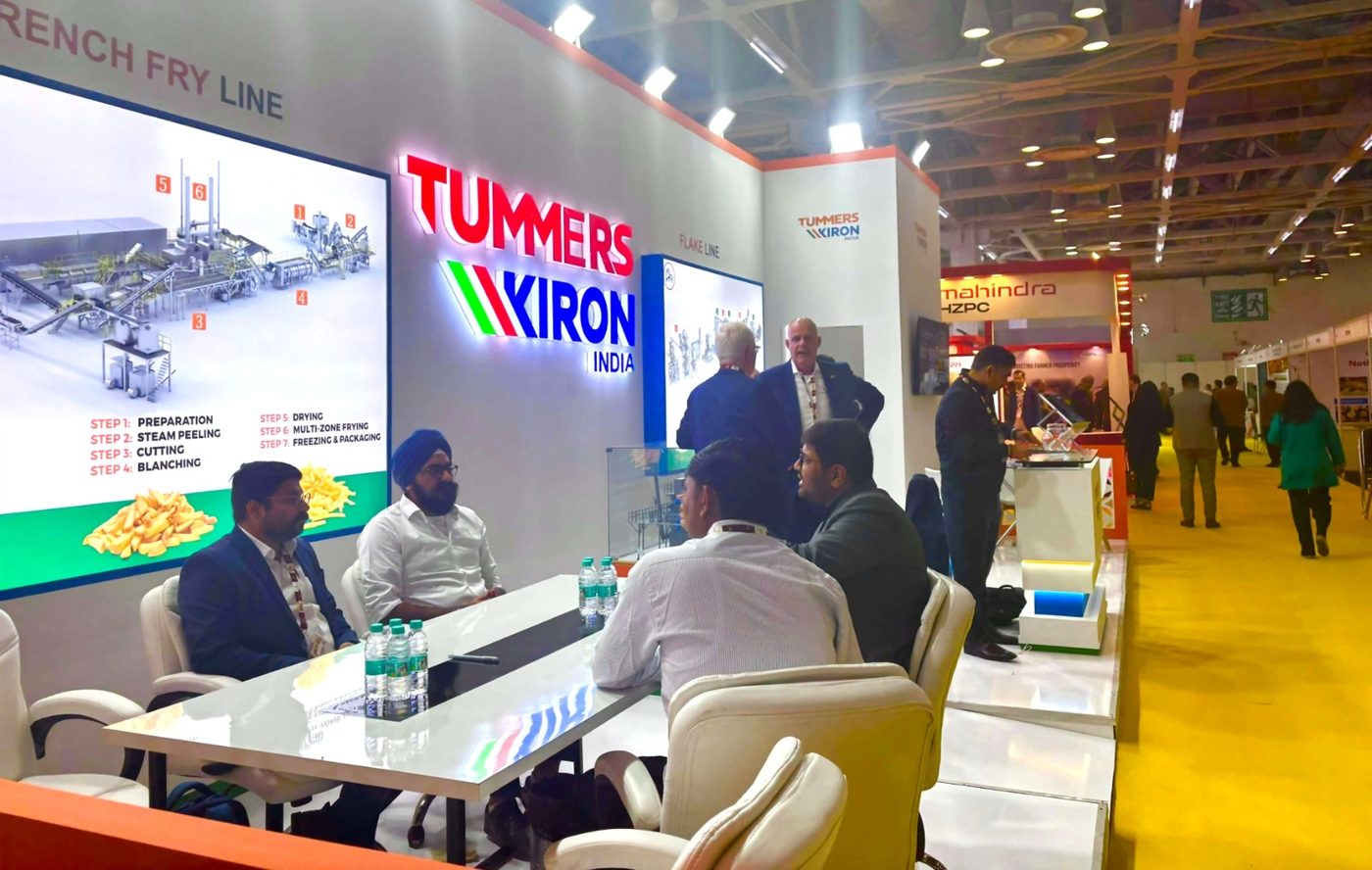
The effect is visible in that photograph: the meeting furniture is in use. A processor evaluating a line can walk from the machine to the seed supplier who will feed it, and to the packaging vendor who will finish it, in one afternoon. Those are the conversations that do not happen over email, because they depend on all three parties hearing the same answer at the same time.
Three
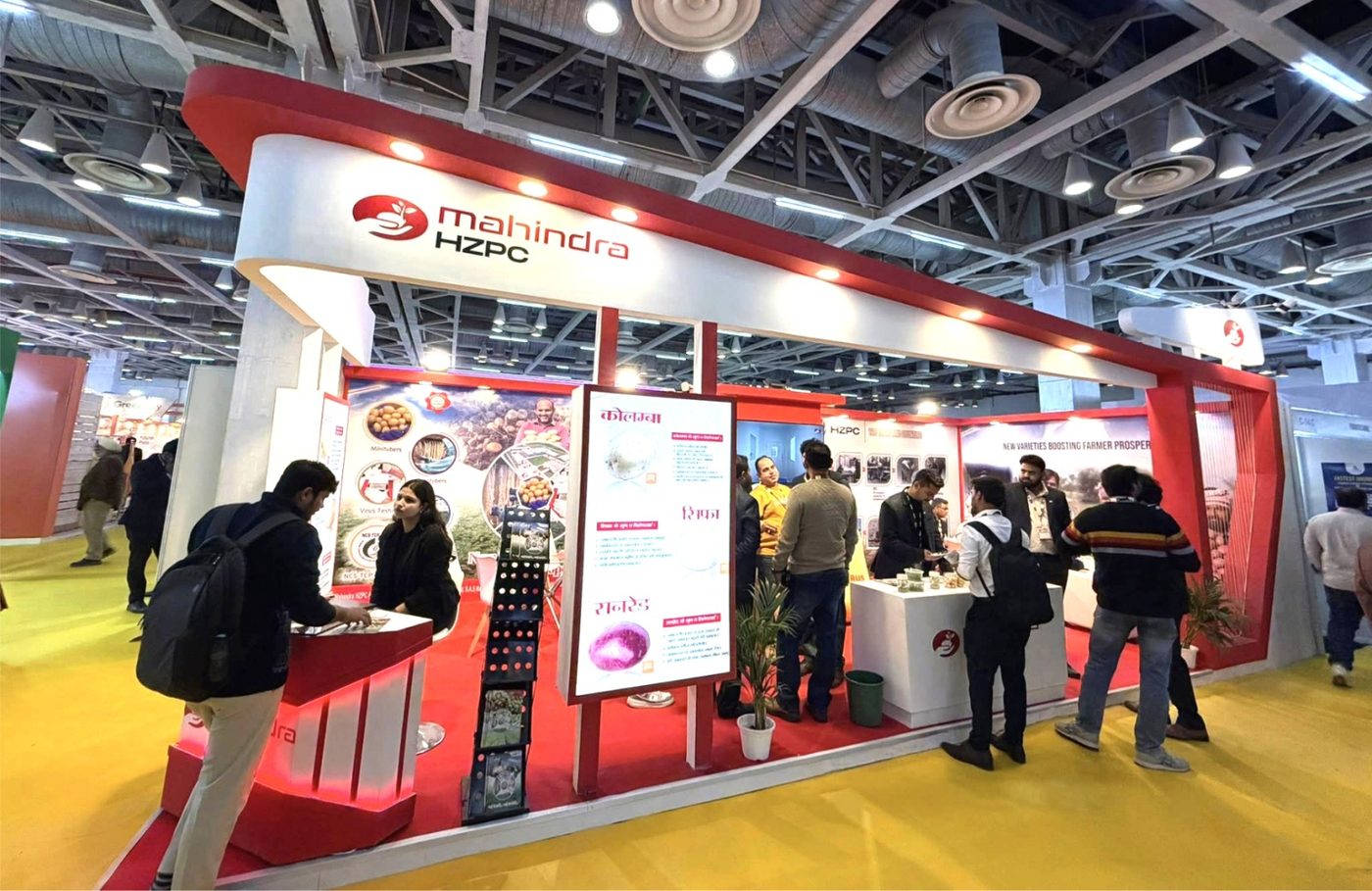
A trade show is also a place where a sector sees its own size. Companies that meet each other only through distributors and price lists stand fifty feet apart for two days. Newer firms get to be looked at next to established ones, which is a form of access that costs a stand rather than a decade.
Several of the biggest builds carried their material in Hindi. That is a deliberate choice about who the company expects to be walking past, and it tells you the floor was not built only for corporate buyers.
Four
Potato does not have the standing policy machinery that sugarcane and wheat have accumulated over decades. Attention has tended to arrive around a price event and leave with it.
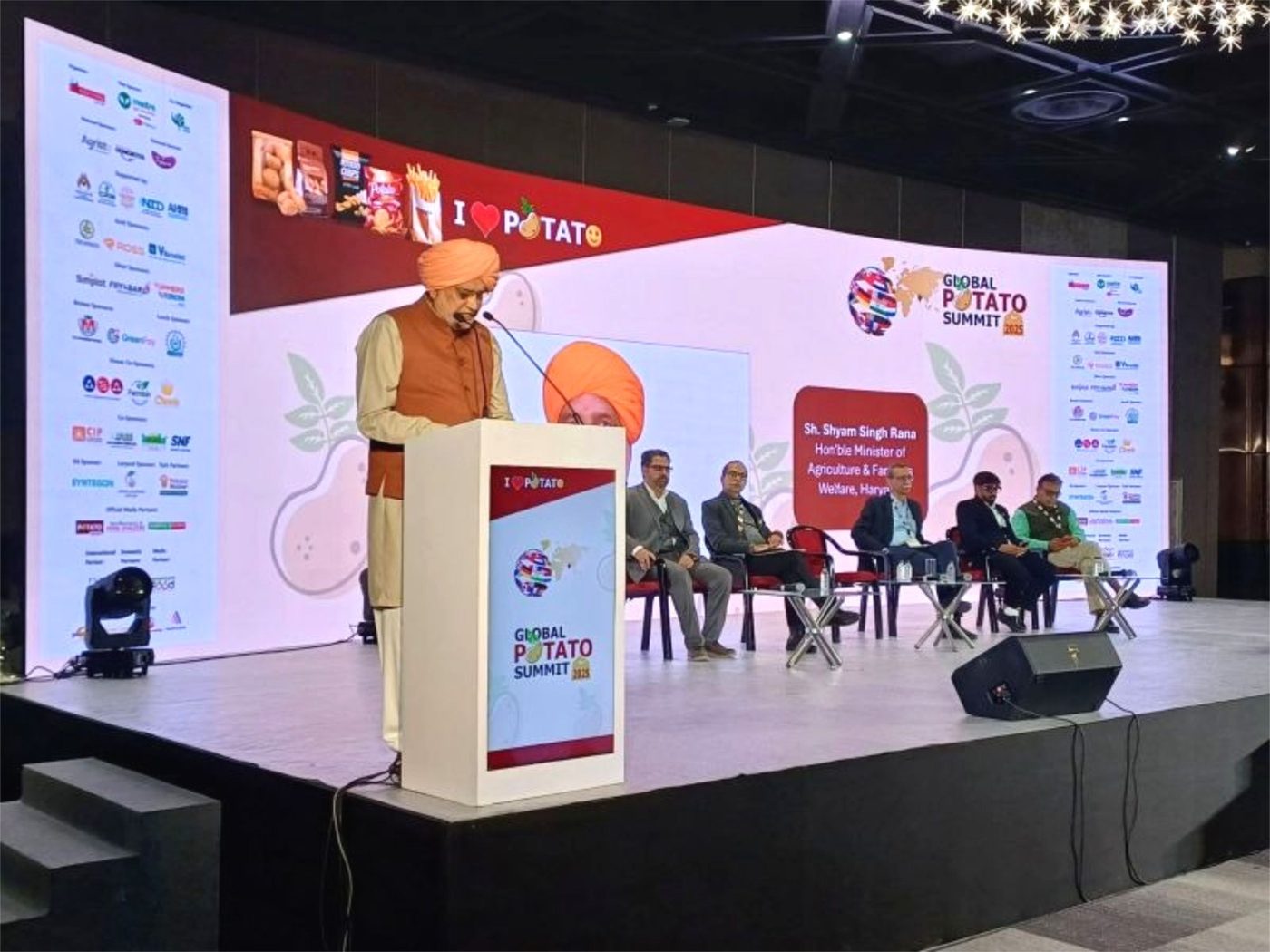
A recurring exhibition changes the shape of that. It puts a date in the calendar on which the sector is assembled, articulate and photographed — which is a far easier thing for a minister's office to attend than a delegation request. Sh. Shyam Singh Rana, Haryana's Minister of Agriculture and Farmers Welfare, opened the first edition from the main stage.
Five
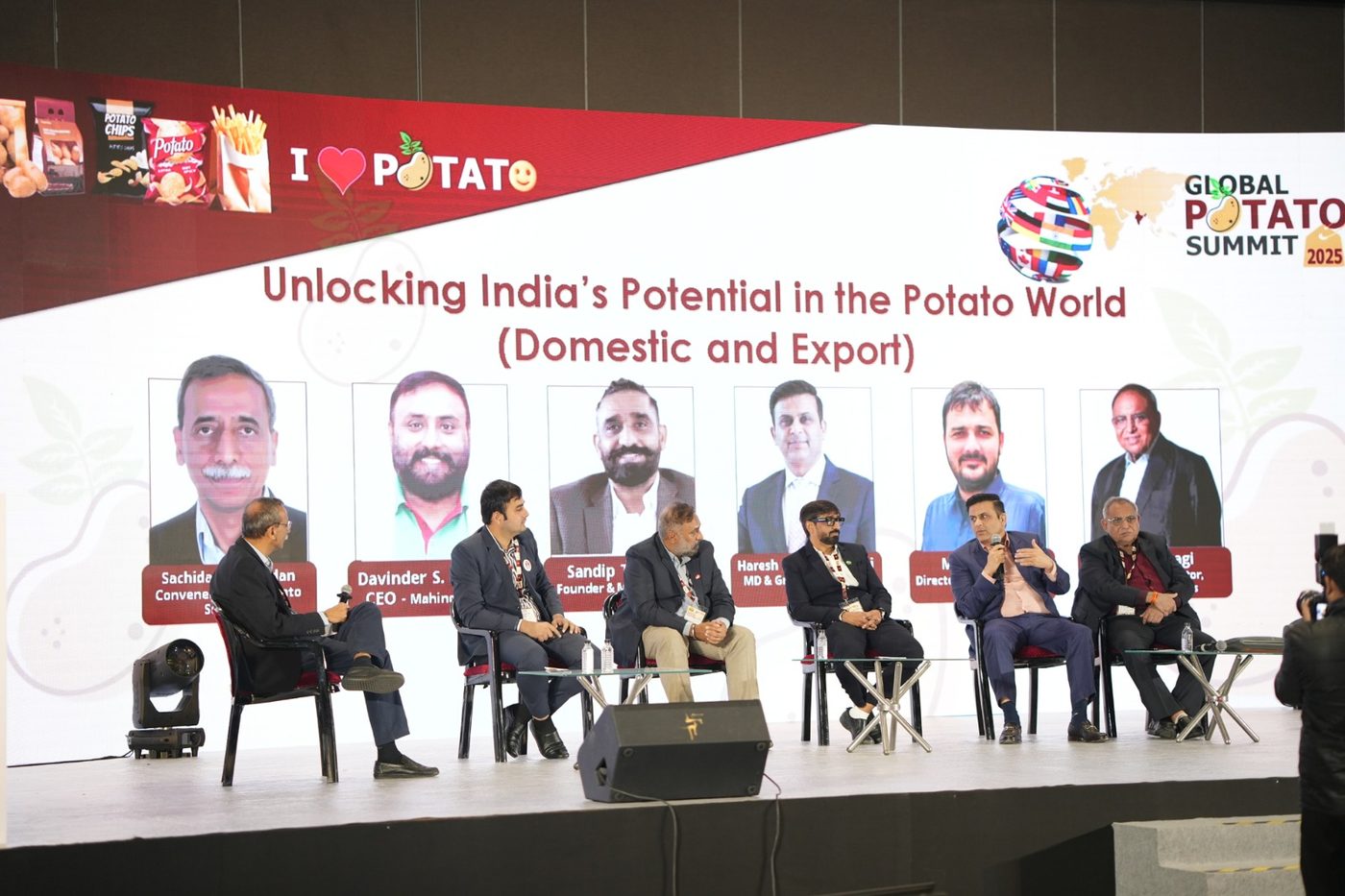
Inside a general fair, potato gets a slot, and a slot usually becomes a cultivation-basics talk aimed at the widest possible room. A dedicated programme can give a full session to export and domestic growth, because nobody present needs persuading that the crop is worth an hour.
That is a change in altitude. The discussion moves from explaining a crop to arguing about its direction — varieties for processing, cold-chain economics, which export markets are actually open.
Six
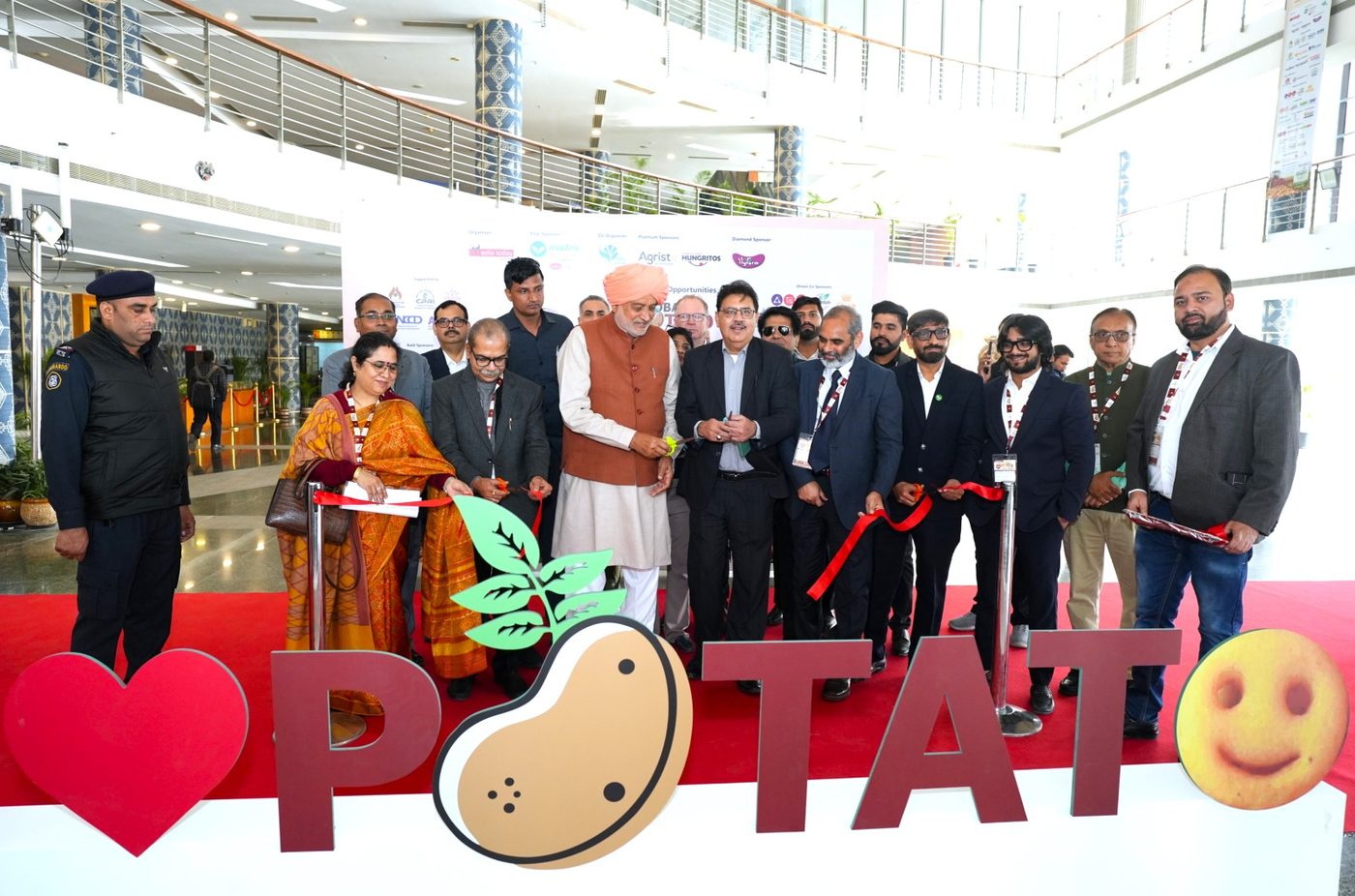
Sponsorship was sold in tiers and carried through the sessions. That is worth noticing for what it says about commitment: companies put money behind a first edition, before any of them could see what the room would look like.
An industry that pays to assemble itself is one that expects to keep doing it. The second edition is scheduled for 16 and 17 December 2026 at the Mahatma Mandir Convention and Exhibition Centre in Gandhinagar, Gujarat.
Gujarat is a deliberate choice for the second edition. It is India's processing belt — the state's plants, cold chains and port access at Mundra and Pipavav are why frozen fry capacity has concentrated there.
The second Global Potato Summit runs 16–17 December 2026 in Gandhinagar. Tell us what you sell and we will come back with what fits — space, size, and whether the exhibition floor or the conference programme is the better place for you to be.
An exhibition in a convention centre is a business event. The people it serves best are the ones with something to specify, source or sell:
India's potato industry now has a fixed annual room of its own. What gets said in it is the interesting part, and December is where to find out.
The first edition was held in December 2025. The second runs on 16 and 17 December 2026 at the Mahatma Mandir Convention and Exhibition Centre in Gandhinagar, Gujarat.
It puts the links of a value chain within walking distance of each other. Seed multiplication, crop protection, processing equipment and finished product were in the same hall, which is not an arrangement a general agriculture fair produces.
Yes. Sh. Shyam Singh Rana, Hon'ble Minister of Agriculture and Farmers Welfare, Haryana, spoke from the main stage, as the podium card in our photograph records.
Processors, equipment makers, seed companies, exporters and traders, and cold-chain operators. It is a business event, built for people with something to specify, source or sell.
One session ran under the title “Unlocking India’s Potential in the Potato World (Domestic and Export)”. The programme was weighted towards trade and growth rather than cultivation basics.
Gujarat is India's processing belt. The state's plants, cold chains and port access at Mundra and Pipavav are why frozen fry capacity has concentrated there.
Tell us what you sell on WhatsApp at +91 94996 68498 or email info@indpotato.com, and we will come back with what fits. Our page on GPS 2026 carries the current dates, venue and stall costs.
Get the latest market intelligence, price trends, and industry news delivered to your feed.
Delegate passes, exhibition stalls, sponsorship or travel for 16–17 December 2026 at Gandhinagar. Tell us what you need and we will come back with current rates.
Where the industry reads it first
Growers, traders, processors and cold-store operators, in one place. Prices, policy and the stories behind them — forwarded, not algorithm-ranked.
Company Directory
Find processors & suppliers
Variety Guide
Compare all 64 varieties
Processing Companies
Top manufacturers

Fry & Bake Technologies brings complete potato chips, French fries, flakes and snack lines to Booth G99, Hall 3 at the 20th Anuga FoodTec India in Mumbai.

The North American Potato Storage Organization runs a two-session webinar on 22 September 2026 at 9:00 am Pacific — about 9:30 pm IST. One session sets box storage against bulk; the other is a Columbia University climate scientist on El Niño and the storage season. Registration has not opened yet.

Media Today Pvt. Ltd. has announced the second edition of the Global Potato Summit for 16–17 December 2026 at the Mahatma Mandir Convention & Exhibition Centre, Gandhinagar — an international exhibition, conference, networking meet and awards, with curated farm and factory visits alongside.