The store-or-sell decision is behind you — the stock is already in cold storage. What's ahead is a narrower, recurring question: release now, hold another week, or hold to the point the season typically firms up. Here's what public market data can actually tell a storage-holding operator about that call, and what it can't.
For anyone with potatoes already in cold storage, the store-or-sell decision is behind them. What's ahead is a narrower, recurring question: release now, hold another week, hold a month, or hold to the point the season typically sees its firmest prices? Every operator carrying stock — a farmer with a booked lot, a trader holding inventory, a cold-storage operator advising clients, an aggregator managing a phased release — faces some version of this call repeatedly through the storage season.
On any single day it looks like a small decision: release this week's allotment, or wait seven more days. Aggregated across an entire season and an entire stock, it's one of the larger levers on realised price that a storage-holding operator actually controls. And it's where the gap between instinct and data shows up most — everyone has a feel for "prices usually firm up later," but few hold that feel against an actual comparison of what waiting costs against what it's likely to earn.
The call also looks different depending on who's making it. A farmer with one lot in a village cold store is deciding for a single harvest's worth of stock. A trader or aggregator managing several depositors' inventory makes the same call at a larger scale, often staggered across weeks rather than decided once. A cold-storage operator isn't usually holding stock on its own account, but is routinely the one fielding the question from clients — well placed to bring a season's worth of pattern-recognition to a decision each depositor only makes once a year.

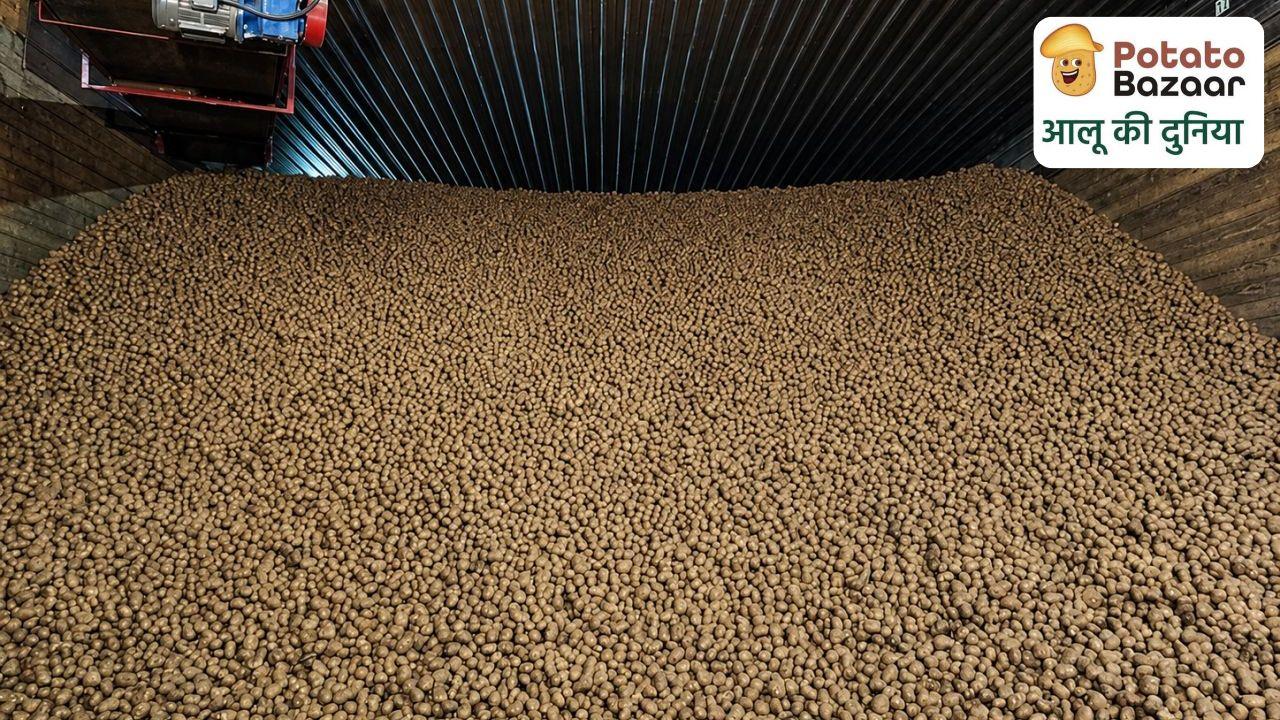
Every additional day in storage carries a cost, even when nothing visibly changes. Rental is the most obvious one — cold-storage space is paid for by the season or by the month, and that cost accrues whether the stock moves in week one or week twenty. Shrinkage is a second, quieter cost: potatoes lose weight in storage through ordinary moisture loss, a real biological cost that shows up as a smaller sellable quantity later even if the per-unit price has improved. And there's the opportunity cost of capital — money tied up in unsold stock isn't available for the next season's inputs, for debt servicing, or for whatever else it could be doing.
None of these costs are dramatic on any single day, but they compound, and they mean the timing question isn't simply "when does the price peak?" It's "when does the expected gain from waiting stop covering what waiting costs?" A rising price curve doesn't automatically justify holding longer if carrying cost is rising alongside it.
Some things about the seasonal pattern can be said with real, citable grounding, without inventing precision that doesn't exist.
India's potato crop is overwhelmingly a rabi crop, harvested primarily between January and March across the major producing states. That single fact anchors the whole seasonal pattern: nearly the entire year's supply enters storage or the market within a compressed few-month window, which is why storage exists as a mechanism at all — to spread a concentrated harvest across a full year of demand.
From roughly March through September, cold-storage releases are what pace the domestic potato market before the next rabi crop arrives. Storage capacity itself is a scarce, trackable resource, not an afterthought — it's tracked at the state level, which is part of why release pacing matters as much as it does.
Directionally, prices typically firm as a storage season progresses, as the harvest-season glut clears and stored supply becomes relatively scarcer against ongoing demand. That's a pattern, not a guarantee — the actual shape of any given season's price curve depends on the size of that year's harvest, competing states' output, and demand conditions that can shift meaningfully from one year to the next.
The release-timing call also isn't a single national decision — it's a regional one. On the same day, the same variety and grade of potato can trade at meaningfully different prices across India's major producing states — Uttar Pradesh, West Bengal, Bihar, Madhya Pradesh, Punjab, Gujarat — driven by local supply, local demand, transport economics, and how much competing stock is being released in that specific market at that specific time. This is well-documented across state horticulture department bulletins, even without a single consolidated all-India figure to point to.
Practically, a release-timing decision made in Uttar Pradesh isn't the same decision as one made in West Bengal, even for stock harvested the same week. An operator holding stock needs a regional read, not just a national one — the same seasonal logic plays out on different timelines and to different degrees depending on where the stock actually is.
Timing a storage release isn't a matter of guessing when the market will peak. It's a comparison of two curves against each other: the expected price trajectory — which historical seasonal patterns inform, imperfectly — and the accumulated carrying cost, which is considerably more knowable, since rental, shrinkage and capital cost can all be tracked with real numbers specific to an operator's own situation.
The release trigger, stated simply, is the point where the incremental holding cost stops being covered by the incremental expected price gain. That framework doesn't require a sophisticated dataset. It requires disciplined tracking of both sides of the comparison, and a willingness to update the decision as new information arrives rather than defaulting to habit.
Potato Bazaar's Market Analytics brings historical price patterns, arrival trends, seasonal signals, and regional demand data into a single view — helping operators sharpen the analytical inputs to release-timing decisions rather than rely on instinct alone.
Three things: the expected price trajectory for the rest of the season, the accumulated and ongoing carrying cost of holding stock (rental, shrinkage, capital), and regional market conditions specific to where the stock is held. The decision is really a comparison between the first two, informed by the third.
Rental for the storage space, which is paid by the season or month regardless of when stock actually moves; shrinkage from natural weight loss during storage; and the opportunity cost of capital tied up in unsold stock rather than available for other use. These accrue continuously, which is why waiting is never free even when the market looks flat.
Because India's potato supply is concentrated in a compressed rabi harvest window (January–March), storage exists specifically to spread that concentrated supply across the year, and prices typically firm as the season progresses and stored supply becomes relatively scarcer. Understanding that general pattern gives the release-timing decision a directional anchor, even without a precise forecast.
Imperfectly, but usefully — genuine structural signals exist: cold-storage capacity and utilisation is tracked at the state level, and crop-calendar and production data is published for every major growing region. What none of that gives is a precise price forecast for a specific lot in a specific mandi on a specific day; it informs the general shape of the decision, not a guaranteed answer.
Tracking two things continuously and comparing them: the expected price trajectory for the remainder of the season, informed by historical seasonal patterns and current regional signals, and the accumulated carrying cost of continuing to hold stock. The release trigger is the point where the incremental expected price gain from waiting longer stops covering the incremental cost of that wait.
Get the latest market intelligence, price trends, and industry news delivered to your feed.
Where the industry reads it first
Growers, traders, processors and cold-store operators, in one place. Prices, policy and the stories behind them — forwarded, not algorithm-ranked.
Potato Prices
Today's mandi rates
Variety Guide
Compare all 64 varieties
Export Guide
Step-by-step process

Out of every 100 potatoes India grows, about 70 are eaten fresh as a vegetable, about 10 are processed into chips, fries, flakes and other products, 7–8 are kept as seed and about 1 is exported; about 5 are lost on the farm and 1 more in the market. Processing has grown from under 1% of the crop in the late 1990s to about 10%: 6.0 million tonnes in 2023, double 2014. Frozen fries exports reached 2,77,109 tonnes in 2025-26. Why only one potato in ten is processed, where processors buy, and what it means.

UP potato averaged ₹860 a quintal by August, against ₹1,088 last year. A bigger crop, cold stores 85% full, slow release and costlier transport to other states explain the fall.

India grows three times as many potatoes as the US, but a US hectare gives twice the harvest. Five American habits that could help Indian farmers grow more, lose less and sell better.
♥ Reader support
Indian Potato covers nothing but potatoes: prices, seed, storage, processing and export, free to read. If our work helps you, support the initiative. Every contribution goes into more reporting from the field.
Why we ask →UPI · cards · net banking · secured by Razorpay